
From Gem Gravel to Sacred Offering: The Spiritual Journey of Ratnapura’s Garum Wattiya
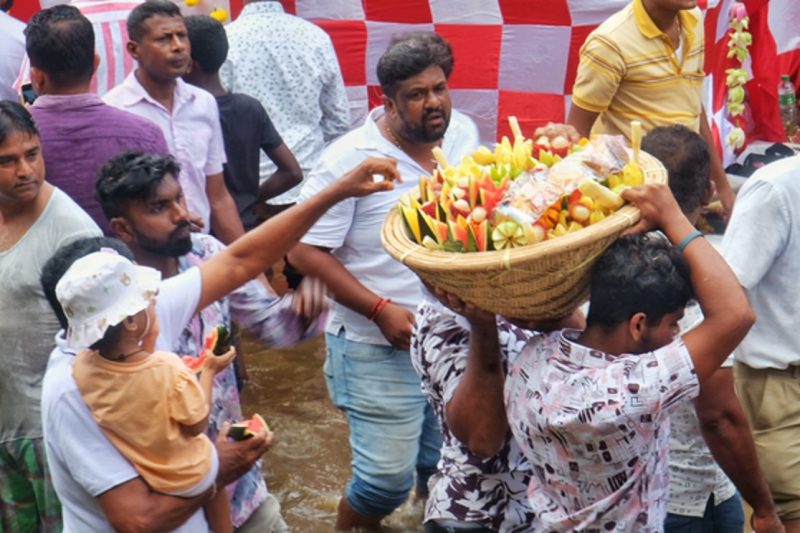
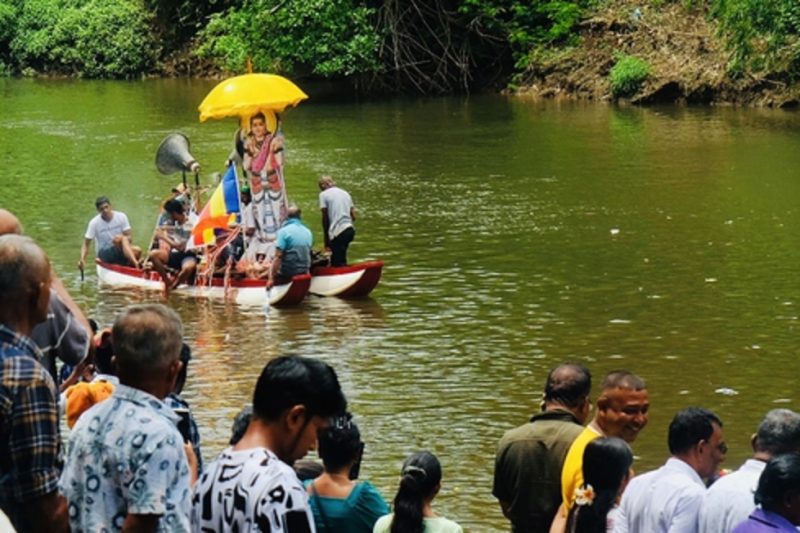
The “Garum Wattiya”, the traditional woven basket long associated with gemstone searching in the rivers and gravels of Ratnapura, took on a profound spiritual meaning during the Water-Cutting (Diya Kapeema) Perahera at Saman Devalaya, Ratnapura, held on 30 July 2026.
In the heart of Sri Lanka’s renowned “City of Gems,” Ratnapura, a simple woven basket carries a story that goes beyond gemstone mining. Known as the “Garum Wattiya,” this traditional basket has been an essential tool of gem miners for generations, used to wash gem-bearing gravel from rivers and gem fields in search of precious treasures hidden within the earth.
The same basket once used to discover gemstones was transformed into a sacred vessel of gratitude, filled with fresh fruits and respectfully offered to God Saman, the guardian deity of Sabaragamuwa and the protector of Ratnapura.
The Traditional Tool of the Gem Miner
For centuries, the Garum Wattiya has been closely connected with the traditional gemstone industry of Ratnapura. Crafted from natural materials, this woven basket is specially designed for washing gem gravel, allowing miners to separate heavier gemstone-bearing materials from ordinary river sediments. To the gem-mining community, the Garum Wattiya represents hope, patience, and perseverance. Each movement of the basket reflects the dedication of miners who search through layers of earth and water, guided by experience, tradition, and the dream of discovering nature’s hidden treasures.
A Sacred Transformation of Meaning
During the Water-Cutting Perahera, the role of the Garum Wattiya changes from a mining instrument into a symbol of devotion. Filled with fruits and presented as an offering, it represents the gratitude of the gem community towards God Saman for protection, blessings, and prosperity. This transformation beautifully demonstrates the relationship between livelihood and spirituality. The basket that once carried the hopes of discovering gemstones now carries offerings of appreciation and faith.
Faith of the Gem Community
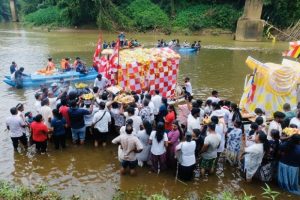
The people of Ratnapura have maintained a deep spiritual connection with God Saman for generations. Before beginning mining activities, many gem miners seek blessings for safety, success, and good fortune. After successful discoveries, they offer thanks in recognition of the belief that prosperity comes through a combination of dedication, nature’s generosity, and divine blessings.
The fruit-filled Garum Wattiya therefore represents more than a religious offering. It symbolizes: Humility and gratitude Prosperity and abundance Respect for tradition The spiritual bond between people and nature.
The Water-Cutting Perahera: A Celebration of Renewal
The Water-Cutting (Diya Kapeema) ceremony marks the final and one of the most significant rituals of the annual Esala Festival at Saman Devalaya. This sacred tradition represents purification, renewal, and the invocation of blessings for rainfall, fertile lands, and prosperity for the nation and its people. Within this sacred environment, the Garum Wattiya becomes a powerful cultural emblem. It reflects the identity of Ratnapura—a city where the gemstone industry is not merely an economic activity but a way of life deeply connected with history, belief, and community values.
The Garum Wattiya remains a timeless symbol of Ratnapura: where gemstones are discovered from the earth, and gratitude rises from the heart.
By Amila Gamage & Kasun Madivila
Photograph & Cultural Documentation: 30 July 2026.
Saman Devalaya, Ratnapura, Sri Lanka